Showing posts with label sedum. Show all posts

June 29, 2013

Bed 4


When we moved in to this house 25 years ago, I made a lot of perennial beds but had no hardscape structures or mature trees. Over the years we have renovated sections of the garden and of course the plants have matured and grown. I am pleased that each bed seems to have taken on its own personality lately. I have "names" for each bed so I know where I am planting what but even those have changed. Originally they were Beds 1, 2, 3, 4 and 5 whereas now they are nicknamed the Front, the Elaine bed, the Gnome bed, Bed 4, The Oak tree bed and the Vortex bed. (!!)
Bed 4 is halfway down the southwest side of the yard beside the pool pump. It's the only one that has retained its original name. Certain plants such as the spruce tree and the shrub rose have exploded in size. Many of the perennials are the originals, others are new. But there is great camaraderie among them so I thought I would show these successful combinations to you.


I have attempted to keep the gentle curved shape by edging sharply in the spring. I actually need to carve it out wider under the spruce because it's so hard to mow the grass under there. The main large plants are (from right to left) a spruce tree that was brought as a sapling from Northern Ontario, a shrub rose that's gone berserk this year in size, a graceful weeping Norway Spruce that still retains its elegant shape, a very ordinary do-nothing Rose of Sharon ( but it was a gift so I keep it) and a common lilac shrub, that bloomed its head off this spring!


The lilac in bloom


A close-up of the Weeping Norway Spruce


In the spring came a lovely group of bright red Darwin tulips. The stone fish wasn't yet being smothered by the Coreopsis 'Moonbeam' so it's still deeper in. I had already planted 3 of the succulents: Sedum and Sempervivum.


When the tulips and muscari faded, in came the Siberian Iris and small yellow Allium moly.


As the Hosta emerged ( 3 clumps of Blue Wedgewood and a transplanted chunk of 'Great Expectations') and the Coreopsis 'Moonbeam' filled out, I moved the Fish to a more prominent position. I also bought several more drought tolerant plants. They are now starting to bloom.


This is a new one that caught my eye: Sempervivum x hybrid 'Commander Hay'. It was big, interesting and cheap. I bought 3 in total. Extremely drought tolerant once established. They are easy to propagate - just remove the small baby rosettes and replant in a new location.


I thought this neon yellow sedum would fit nicely with a bed that is mostly green, stone blue and fall hues. This is Sedum rupestre (reflexum) 'Angelina'. It has a long, lanky habit.


Once I became totally enamoured with these succulents, I just ran right out and bought another one! Above is Sempervivum arachnoideum - Spider Web Hens and Chicks. Before it started to bloom, the rosettes seemed to be covered in spiderwebs.

Here are a few more shots of how well they blend together.


The daylilies are ready to bloom and the huge shrub rose will start to develop hips.


Helianthus are starting to bloom and in August the Red and Gold Fall Helenium will emerge (new this year).


Bed 4 has turned into a great 4 seasons show that has unusual plants that somehow co-exist well and even show each other off really brilliantly.

Please check my food blog - the latest recipe posted is Spinach Cavatappi Gratin.


September 15, 2012

Garden Blogger's Bloom Day - Sept 15th


We've had some good hard rain, the nights are turning cooler but the warm breezy (non-humid) days we've had lately have been the best of the summer!!! Today is Garden Blogger's Bloom Day and I still have quite a bit happening in my garden. The spotlight is on repeat-bloomers and annuals.


White phlox are still (barely) hanging on


The ornamental kale plants that I grew from seed are really huge


The shrub rose beside the deck is blooming again: apricot buds turning into….


….white blossoms


The sedum is turning pink and the bees are flocking to them


Weigela is in bloom again


The 'Fairy' rose is loaded with its fall blossoms


Black Eyed Susans are not prepared to wilt just yet


The rain helped the pink snapdragons come back


Feather Reed Grass 'Karl Foerster' waves gently in the wind


The big shrub rose is now full of hips


One or two Rose of Sharon blossoms are tucked in behind branches


Scabiosa that I grew from seed is everywhere


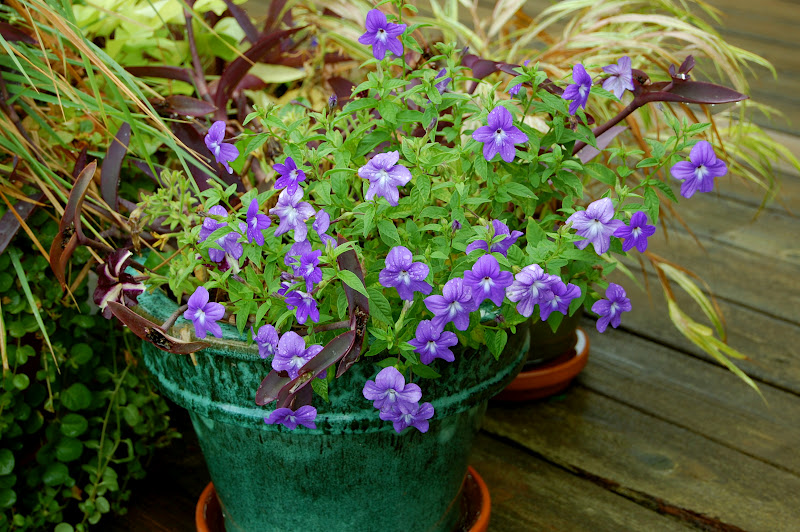
Browallia benefitted from its July haircut and fertilizer


My friend gave me a Gerbera daisy, which has bloomed again since I planted it


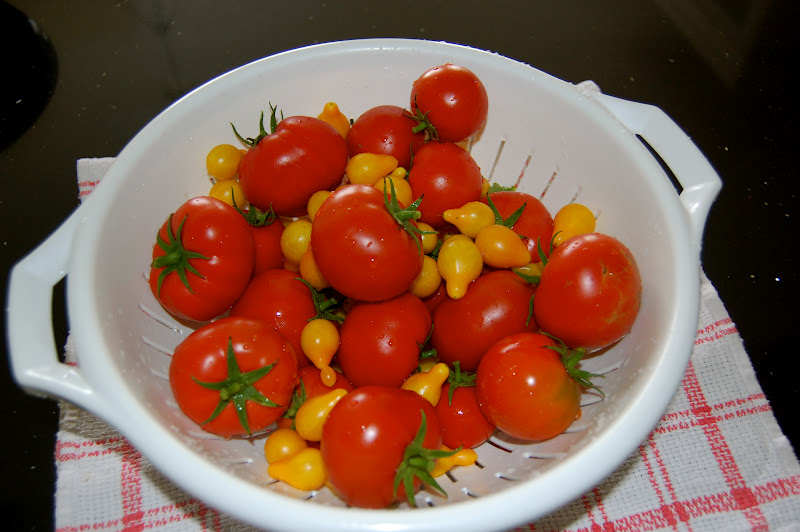
And we have lots and lots (and lots!) of home grown tomatoes!!

Garden Blogger's Bloom Day is a Meme created by May Dreams Gardens http://www.maydreamsgardens.com/
Gardeners post images of what's blooming in their garden on the 15th day of every month. All are welcome to participate.


July 31, 2012

Combining Plant Textures in the Garden


When people think of designing their garden, they usually think of size and colour first: how big is the plant going to become? What colour will it be in summer? in autumn?
Then they attempt to place the different plants into beds using the design concepts of proportion, order and repetition.
It's easy to forget about or ignore texture but this element is also very important.

Texture refers to the surface quality of a plant. Plant textures range from fine to medium to coarse. Most plants have a medium texture so it's a great idea to combine medium with fine and coarse. This adds interest as well as achieves an atmosphere of calm relaxation or of drama.


Feather Reed grass 'Karl Foerster" has 2 types of texture: the sharp, vertical stalk and the fluffy soft plumes.


An article from Landscape Ontario http://landscapeontario.com/ says that "…the easiest way to assess the amount of contrast in the texture of the garden is to imagine a black and white photo of the area. The removal of colour helps to focus attention on the size and shape of the foliage and woody components beyond the appeal of their overall form and colour."

I tried this and it works!! Compare above and below. Look how the sharp needles of the mugo pine contrast with the thick, rounded leaves of the Sedum and the long, thin foliage of the Miscanthus grass and the Pennisetum.


Below is a good example of varying textures: the droopy Miscanthus foliage, the curvy crunchy leaves of Kale, the delicate small leaves of periwinkle and lamium. Sedum 'Autumn Joy' peeks out from the back.


Here's another shot of the same area, when the Sedum flowers have turned pink and the Pennisitum has feathery plumes.


This is a close-up of Sedum 'Autumn Joy'….


…and Sedum with grasses and Mugo Pine.


Above is a good example of combined textures: a sleek purple Siberian Iris on a long thin stalk is directly in front of a sharp needled Weeping Norway Spruce. And beside it is a coarse-leaved blue Hosta.


The Queen of textures is probably a cactus!!


When I was on this garden tour, the home owner had combined large heart-shaped Hosta leaves with smaller triangular ones. A tiny tiny spiky Hosta, the miniature 'Pandora's Box' is the focal point. The blue geranium alongside provides another type of texture as well as colour.


Many textures are to be found in the photo above: coarse (Hosta) fine (Euonymus) and very fine (evergreen).


Viburnum 'Mariesii', with its drooping horizontal branches and flowers runs right into fine, grass-like daylily leaves.


 Coarse plus 2 types of fine texture: thick leaved blue Hosta with a geranium and Painted Japanese Fern.


Indoor plant Caladium does just fine in containers in northern climates. Its colourful leaves are its own source of texture.


Feathery white Astilbe 'Deutchland' flowers beside smooth, velvety begonia blossoms.


Add a bit of hardscaping (cement pot and statue) to frothy ferns, Japanese Golden grass and soft leaf Helichrysum and you create a dramatic but harmonious area in the garden.
Related Posts Plugin for WordPress, Blogger...